
Not Their Peers — Powerful Families
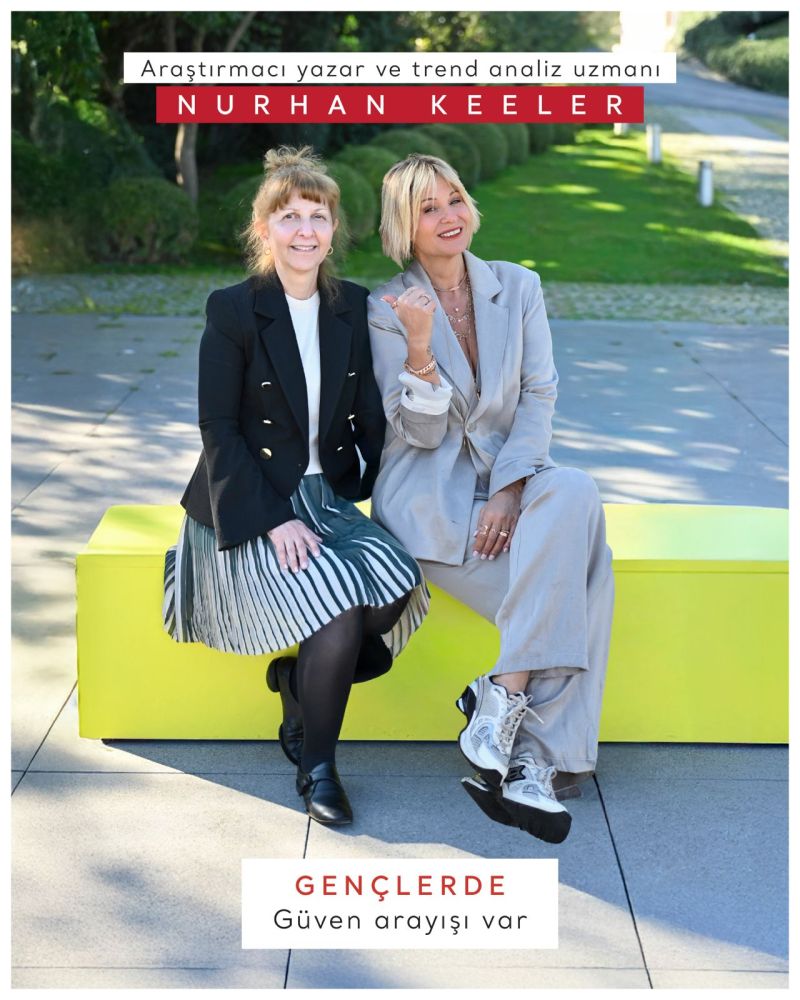
Young people are searching for a sense of security.
AA: The proportion of those who prioritize “mental health needs” is over 65%... Are young people truly this lonely?
NK: By definition, being “young” implies a spirited, restless energy capable of shaking up society and the system. Yet now, partly due to technology, they are confronted with undeniable realities. Issues that cause anxiety are constantly thrust in their faces. Nepotism is rampant. They aren't just competing with their peers; they are up against powerful families. Nevertheless, hope still sprouts from things that seem small or simply human—like seeing someone succeed through their own merit, or witnessing an act of kindness between people.
In the 80s, the urban population was around 60–65%. Now, it’s 93%. There is a sense of “crowded loneliness.” There is a search for security. Constant comparison and a pervasive sense of inadequacy are the norm. This, in turn, triggers feelings of guilt. When families—and indeed society as a whole—are locked in a struggle for survival, no one has much energy left to care for others. There are very few people who truly listen, understand, or look out for one another.
Meritocracy seems absent; nepotism is rampant.
AA: Career anxiety is above 60%... What is their perception of the future? Is hope fading?
NK: If they want to open a pharmacy, they find one on every corner, plus there are new regulations to contend with. If they want to be a teacher, there’s the uncertainty of whether they’ll actually get appointed. Meritocracy seems absent. Nepotism is rampant. They are expected to know multiple languages—not just one, but foreign languages *and* coding. If they become engineers, they find themselves pigeonholed into the aviation and defense sectors. There is a lingering feeling that they won't measure up—that they will fall short. Yes, they are anxious.
AA: In your opinion, what do young people demand the most? Money, opportunity, or being seen?
NK: It might be a lot of money, power, and so on, but if they aren't seen and validated, visibility becomes more important. There are young people who have opportunities and resources yet feel powerless, insignificant, or as if they don't truly exist—as if they haven't managed to come into their own. They need to find their own frequency. They need opportunities to demonstrate their potential and become visible.
Young people harbor a sense of hurt.
AA: The concepts that recur most frequently in the research are “being understood,” “being valued,” and “not being alone.” What do these three words tell you?
NK: Classrooms hold 80–90 students; dorm rooms house 6–8 people. There is a harsh, overwhelming crowd. It is difficult for young people to be perceived with nuance and care. They are forced to explain a question—or even a problem—in a matter of seconds. Yet, loneliness isn't cured by brief coffee chats. They need someone to understand them, to approach them with care rather than generalizing them as “Gen Z.” Families drift away from their children with questions like “So, what did you do?” or “What are you going to do?” Conversations turn into Q&A sessions. Instead of just listening intently and offering advice, what is needed is genuine sincerity.
They face different kinds of vulnerabilities. Some have become invisible in big cities. Others feel under a microscope or trapped in small towns. Some are forced to stand on their own two feet and shoulder their family's burdens. Some seek the attention outside that they couldn't find at home. Others remain under the watchful eye of parents or older siblings. Above all, they need people who will see them as individuals in their own right. They are neither fully adults nor fully children. Transitional periods are always difficult.
Turkey is offering its youth a time that feels like a waiting room—a period of uncertainty.
AA: According to research results, belief in the overall benefit of the “Take Care of Yourself” (Kendine İyi Bak) Youth Program stands at over 86%. What do you think this high figure indicates?
NK: It is a very high figure. It provides macro-level support to young people through touches that might seem micro. It instills hope, kindness, curiosity, a sense of discovery, and joy. It makes them feel good and feel seen—like having someone looking out for you. When the small burdens in young people's lives are lifted, life begins to flow again.
AA: In your opinion, what is the hardest part about being young in Turkey today?
NK: It feels like a time of limbo—a period where one is merely waiting for what comes next. There is the nagging worry: “What if *these* are the good times?” Uncertainty and the inability to thrive in one's own birthplace are causes for anxiety. Consequently, they are turning toward other countries and regions. It is a loss on two fronts: for the country and for them. Starting over from scratch in a different part of the world isn't easy. A career might not have to start from zero, perhaps, but other aspects of life do. Being new in a place keeps you occupied for a while as you try to figure it out. But how fully will a foreign land accept you?
They have goals rather than dreams.
Credits
“Take Care of Yourself” (Kendine İyi Bak) Program (2024–2026)
Interview: Ayşe Arman
March–April 2026
Evyap
Executor / Implementing Partner: Ahbap
Concept and PR: Lea İstanbul
Research: Trend Group Market Research
Source: https://www.armanayse.com/biz-variz-biz-gelecegiz/